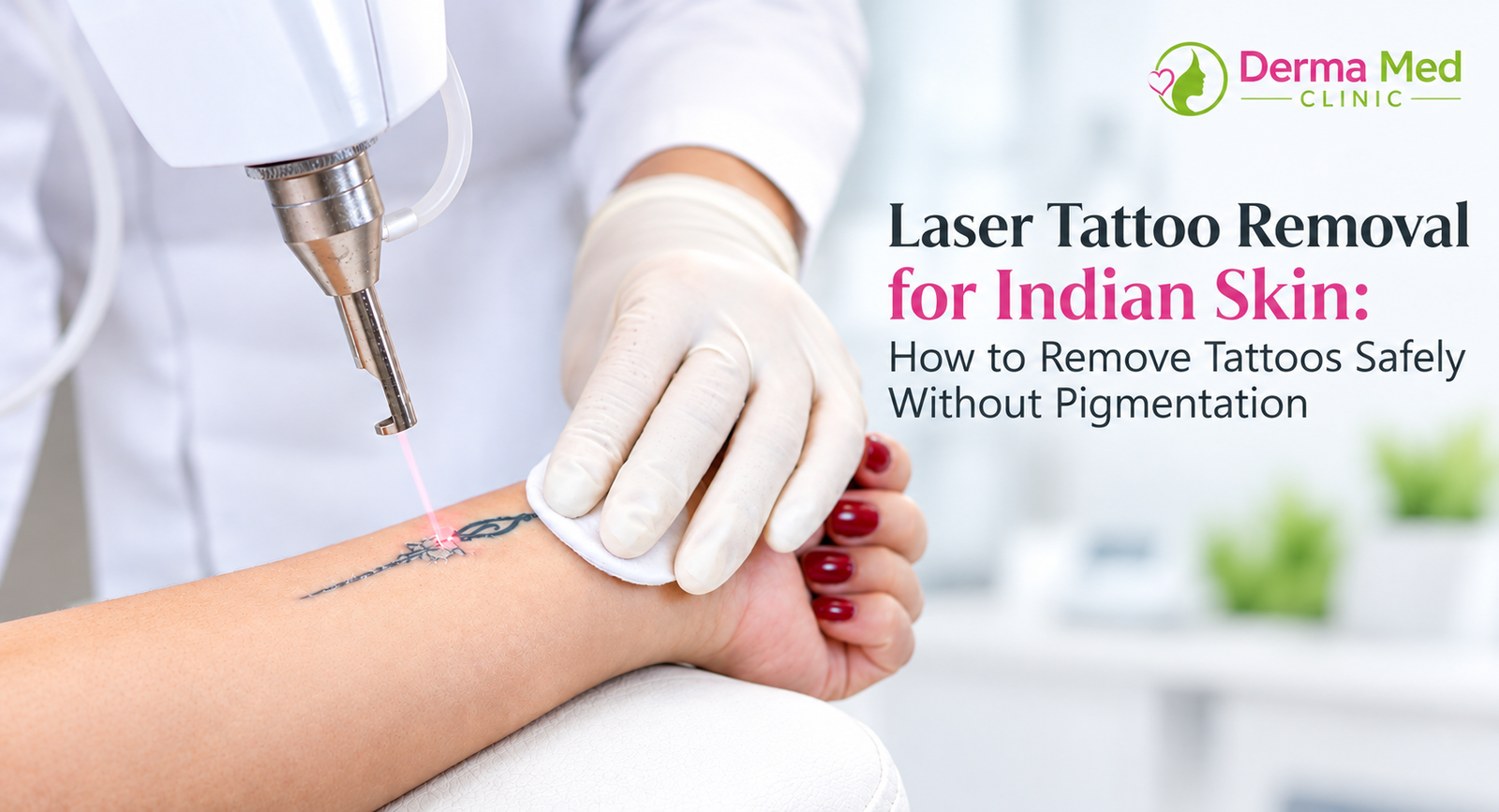
Tattoos may look attractive when you first get them, but preferences can change over time. Whether it is an unwanted name, an old design, or a tattoo that no longer fits your lifestyle, laser tattoo removal is one of the most commonly used methods for reducing unwanted tattoo ink. However, people with Indian skin tones need to be particularly careful because darker skin can have a higher risk of developing temporary or prolonged pigmentation changes after certain laser treatments.
The good news is that with proper skin assessment, appropriate laser technology, carefully selected settings, and professional supervision, the risk of pigmentation can be significantly reduced. Consulting the Best Dermatologist in Chhatarpur can help ensure that your tattoo removal treatment is planned according to your individual skin type and tattoo characteristics.
Why Is Tattoo Removal Different for Indian Skin?
Indian skin generally contains more melanin than lighter skin types. Melanin is the natural pigment responsible for skin colour, but it can also interact with laser energy. If inappropriate laser settings or technology are used, the surrounding skin may experience pigmentation changes.
Hyperpigmentation can cause the treated area to become temporarily darker, while hypopigmentation can make it appear lighter than the surrounding skin. These changes may improve gradually, but prevention and proper treatment planning are important.
This is why laser tattoo removal should not be approached as a one-size-fits-all procedure. A dermatologist should evaluate your skin tone, tattoo colour, tattoo depth, location, and previous treatment history before selecting the appropriate laser parameters.
How Does Laser Tattoo Removal Work?
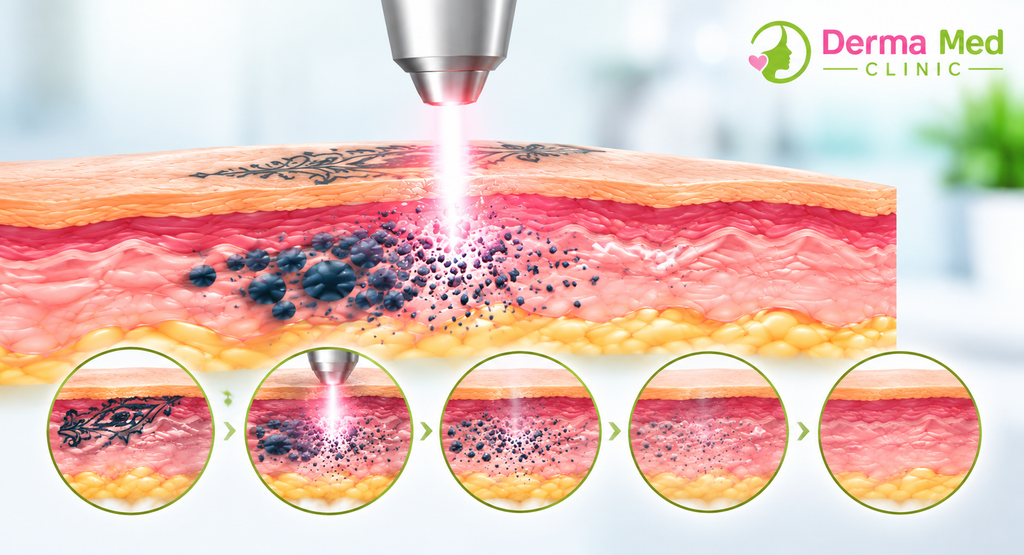
Laser tattoo removal works by delivering controlled pulses of laser energy into the tattooed area. The energy targets tattoo pigment and breaks larger ink particles into smaller fragments. The body’s natural processes then gradually clear these fragments over time.
Different tattoo colours and ink types may respond differently to laser wavelengths. Therefore, the treatment approach depends on the tattoo rather than simply using the same settings for every patient.
For Indian skin, dermatologists often take a conservative approach to laser settings to reduce unnecessary damage to the surrounding skin. Depending on the tattoo and skin type, different laser technologies may be considered.
Can Laser Tattoo Removal Cause Pigmentation?
Yes, pigmentation changes are a possible side effect of laser tattoo removal, particularly in individuals with darker skin tones. However, this does not mean that people with Indian skin cannot undergo laser tattoo removal safely.
The risk can be reduced through:
- Proper assessment of skin type before treatment
- Selecting an appropriate laser and wavelength
- Using suitable energy settings
- Performing a test spot when appropriate
- Allowing adequate healing time between sessions
- Following strict sun protection
- Avoiding unnecessary irritation of the treated area
A qualified dermatologist can also monitor your skin after every session and modify the treatment plan if required.
Why Choosing the Right Dermatologist Matters
Laser tattoo removal requires more than simply operating a laser device. Understanding skin biology, laser parameters, tattoo pigments, and potential complications is essential for achieving a safer treatment outcome.
If you are searching for the Best Dermatologist in Chhatarpur, look for a qualified dermatologist who can assess your skin individually and explain realistic expectations. The number of sessions required can vary depending on factors such as tattoo size, colour, ink depth, age of the tattoo, location, and individual response to treatment.
A professional consultation also gives you an opportunity to discuss previous laser treatments, scars, pigmentation concerns, and any history of skin sensitivity.
How to Reduce the Risk of Pigmentation After Treatment
After laser tattoo removal, proper aftercare is an important part of the treatment process. Your dermatologist may recommend keeping the treated area clean, avoiding unnecessary rubbing or scratching, and protecting the skin from direct sun exposure.
Sun protection is particularly important for Indian skin because UV exposure can contribute to pigmentation changes. Follow the aftercare instructions provided by your dermatologist and avoid applying irritating products to the treated area unless specifically recommended.
It is also important not to rush the process. Tattoo removal usually requires multiple sessions because the skin needs time to heal and the body needs time to clear fragmented pigment.
What Should You Expect During a Consultation?
During your consultation, the dermatologist will examine your tattoo and skin. They may discuss the tattoo’s age, colours, size, location, and previous treatments. Your skin type and pigmentation history can also influence the treatment plan.
The dermatologist can then explain which laser approach may be suitable, how many sessions might be required, possible side effects, and how to care for your skin between sessions.
Remember, the goal should not simply be faster tattoo removal. The goal is to achieve effective fading while maintaining the health and appearance of the surrounding skin.
Conclusion
Laser tattoo removal can be an effective option for people with Indian skin, but careful treatment planning is essential to minimize the risk of pigmentation changes. Choosing appropriate laser technology, conservative settings, adequate intervals between sessions, and proper aftercare can all contribute to a safer treatment experience.
If you are considering tattoo removal and are concerned about pigmentation, consult a qualified dermatologist for a personalized assessment. Searching for the Best Dermatologist in Chhatarpur can be a useful starting point, but your final choice should be based on the dermatologist’s qualifications, experience with laser procedures, and ability to provide individualized care.
Frequently Asked Questions (FAQs)
1. Is laser tattoo removal safe for Indian skin?
Yes. Laser tattoo removal can be performed on Indian skin, but the treatment should be customized according to the patient’s skin type, tattoo characteristics, and pigmentation risk.
2. Can laser tattoo removal cause darkening of the skin?
Temporary hyperpigmentation can occur after treatment, especially in darker skin types. Appropriate laser settings, sun protection, and proper aftercare can help reduce the risk.
3. How many sessions are needed to remove a tattoo?
The number of sessions varies from person to person. Tattoo colour, size, depth, location, type of ink, and individual response can all affect the treatment timeline.
4. How can I prevent pigmentation after tattoo removal?
Follow your dermatologist’s aftercare instructions, protect the treated area from excessive sun exposure, avoid scratching or irritating the skin, and attend follow-up appointments as recommended.
5. How do I choose the right dermatologist for tattoo removal?
Look for a qualified dermatologist with appropriate experience in laser procedures and the treatment of different Indian skin types. If you are looking for the Best Dermatologist in Chhatarpur, schedule a consultation to discuss your tattoo and pigmentation concerns before starting treatment.